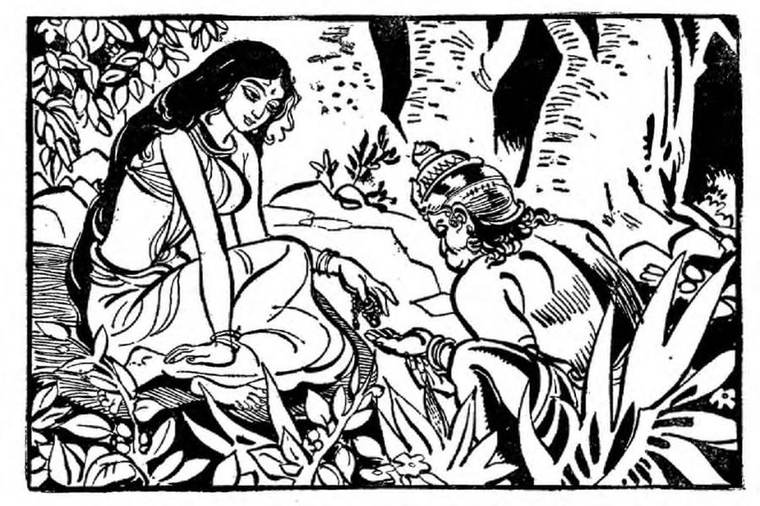
Sargas 30–31: Hanumān's delicate problem, deliberated in full — appear suddenly, and she screams and the guard wakes; speak polished Sanskrit like a brāhmaṇa, and she takes him for Rāvaṇa in a new disguise. His solution is the kāṇḍa's loveliest invention: from the branch above her, softly, he recites the story of Rāma from Daśaratha onward — the name arriving before the messenger, in narrative, the one medium grief trusts. Sargas 32–36: the wonder, the fear (a talking monkey — is this dream? madness? māyā?), his descent and self-introduction, her interrogation — and the ring with Rāma's name, which she receives "as if her husband's hand had reached her." Her questions then are all of Rāma: does he eat? does he grieve? will he come? — and Hanumān's answers are the model of the true messenger, truthful about the grief, absolute about the coming.
The refusal that defines her
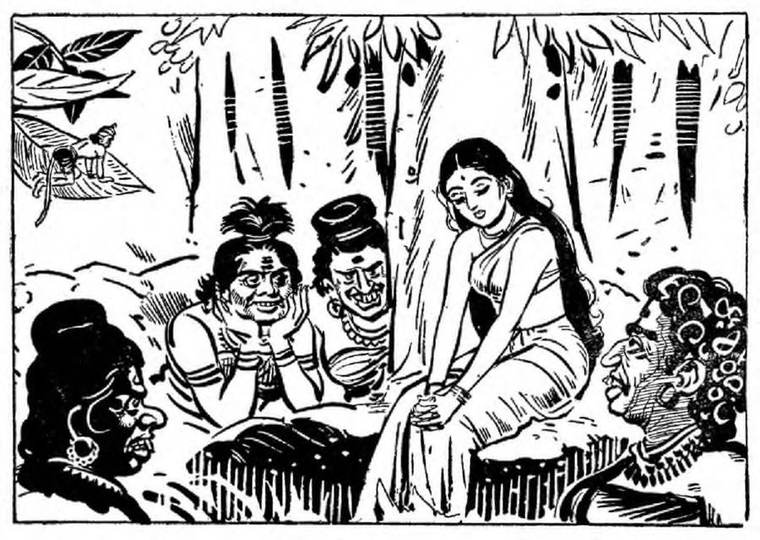
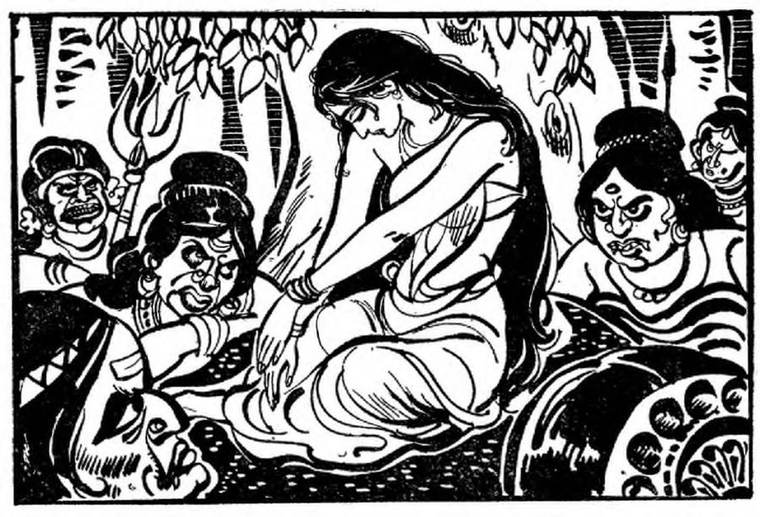
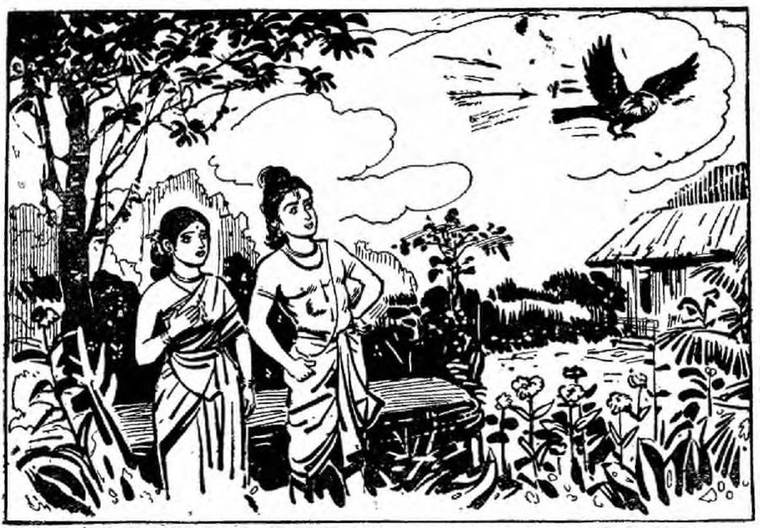
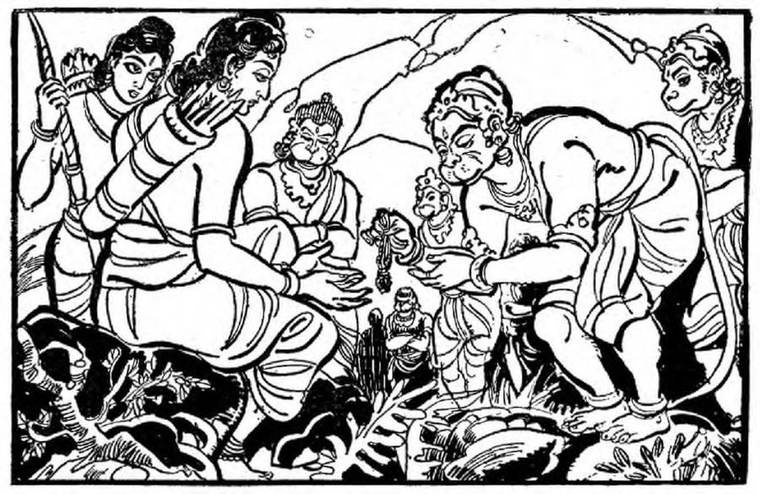
Sarga 37: Hanumān offers the shortcut — mount my back; within the hour you are in Rāma's lap. Sītā declines on grounds that define both her and the epic's ethic: fright and frailty aside, she will not willingly touch a male body other than Rāma's (Rāvaṇa's seizure was force; this contact would be choice); and above all, Rāma's honour requires that he defeat the abductor and reclaim her in the open — a smuggled rescue would make her recovery a theft and his glory a fraud. The captive scripts the terms of her own liberation, and they are maryādā's terms. Sarga 38: for a token no impostor could counterfeit she gives the memory of Kākāsura — the crow (Indra's son) who wounded her at Citrakūṭa, against whom Rāma launched the brahmāstra on a blade of grass, sparing him at the cost of one eye when he surrendered — "he who did that for a crow's scratch, why does he tarry now?" — and with it the cūḍāmaṇi from her hair.
Kamba Rāmāyaṇam differs
Tamil tradition holds Kambar's Sundara Kāṇḍam in singular reverence — the portion most memorized, most recited, most sung. Kambar heightens Sītā's viraha with the full apparatus of Tamil love-poetics and expands her testing of the messenger; and he sharpens the kāṇḍa's theology of grace with touches like Hanumān's reply to her doubt about monkeys defeating Laṅkā — the armies are nothing, Rāma's arrow is everything. Where Vālmīki's Sundara is the triumph of the devotee's effort, Kambar's tilts the weight wholly onto the Lord's power, with the devotee as its willing channel.