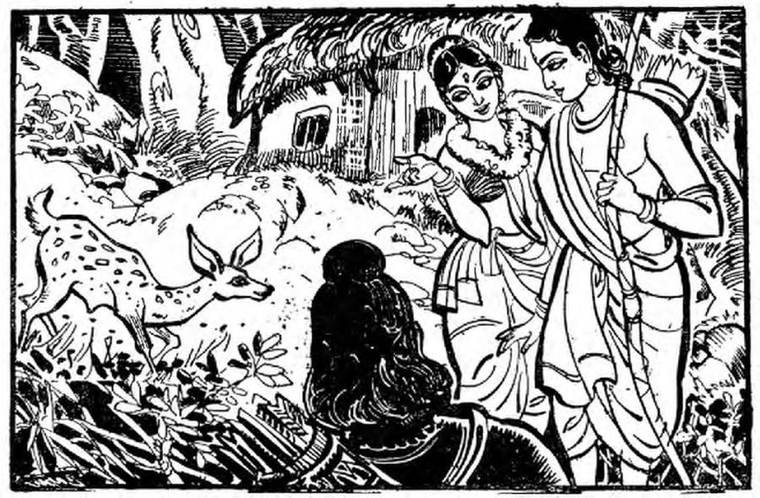
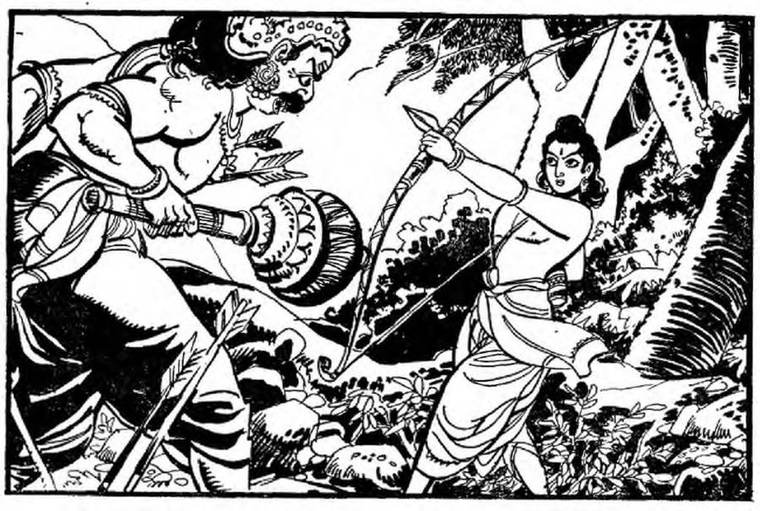
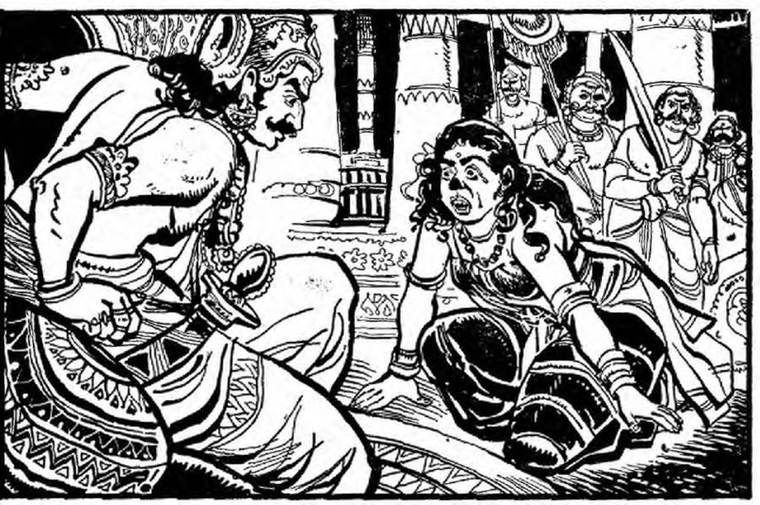
Sargas 42–44: the impossible deer — gold hide, silver spots, jewelled antlers — grazes past the āśrama. Lakṣmaṇa says at once: this is Mārīca (no such deer exists; he has done this trick before). Sītā's desire — to keep it living, or failing that its skin — overrides; Rāma, half-knowing (he tells Lakṣmaṇa that if it is a demon it must die anyway), pursues. The chase is long and taunting; the arrow at last; and dying, Mārīca performs his final treachery perfectly — in Rāma's own voice: hā sīte, hā lakṣmaṇa! Sarga 45: the words' work — Sītā, terror-struck, turns on the immovable Lakṣmaṇa with the cruellest speech of her life (he covets her, she charges; he wants his brother dead). Pierced beyond endurance, invoking the forest deities to guard her, he goes.
The saṁnyāsī at the door
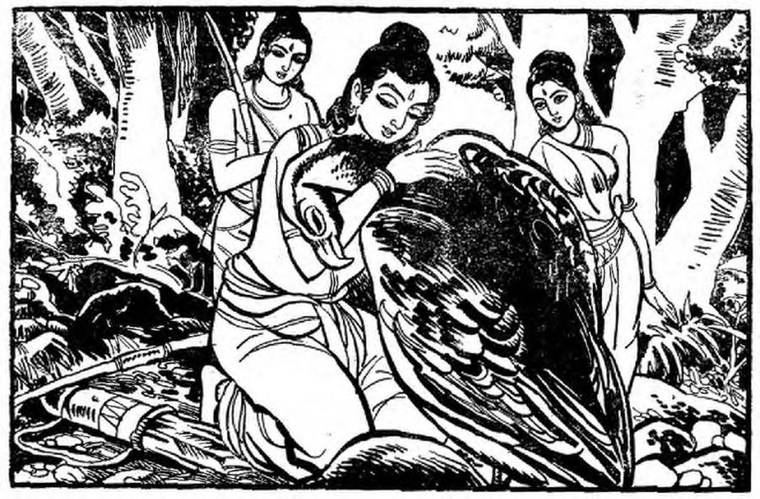
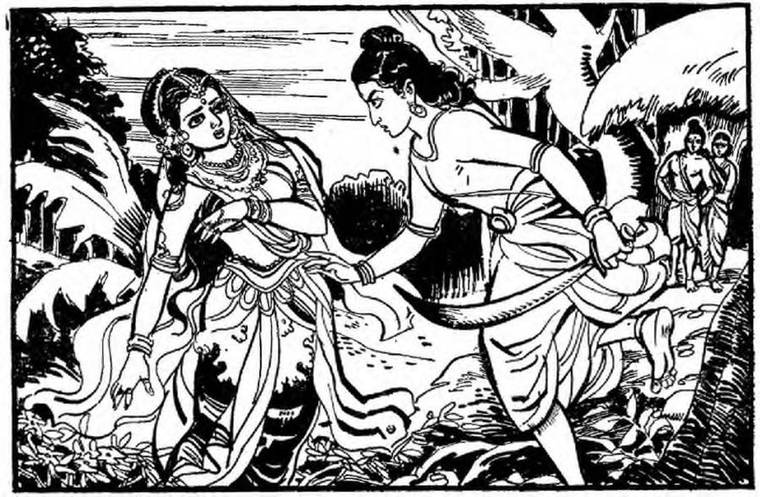
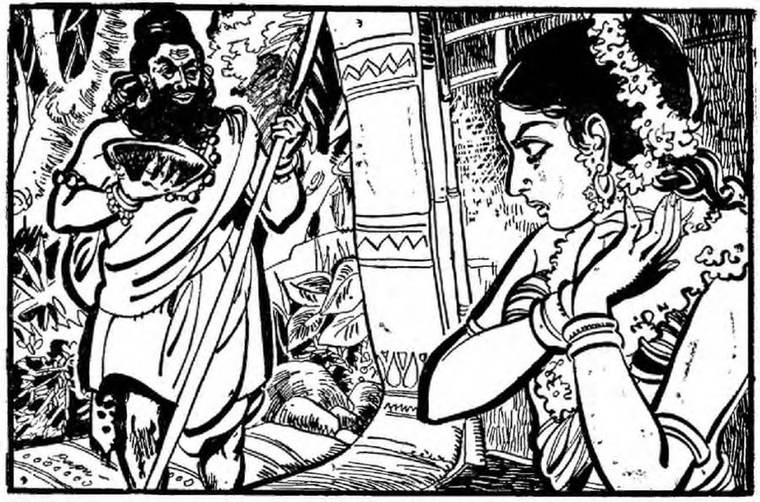
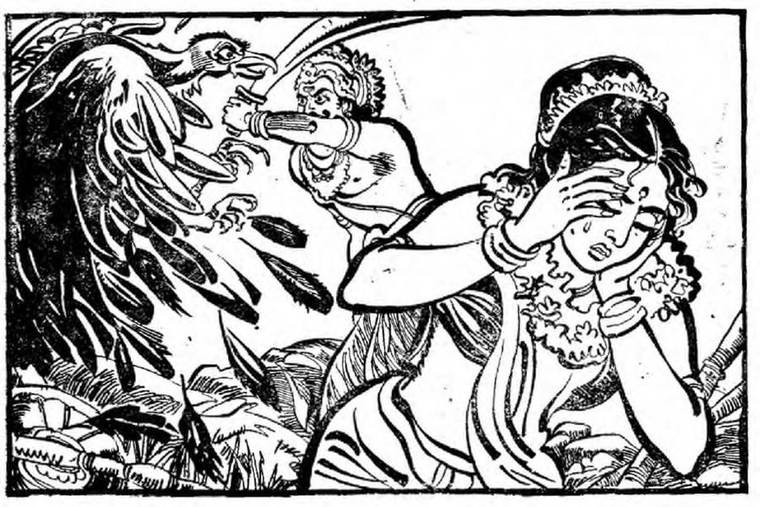
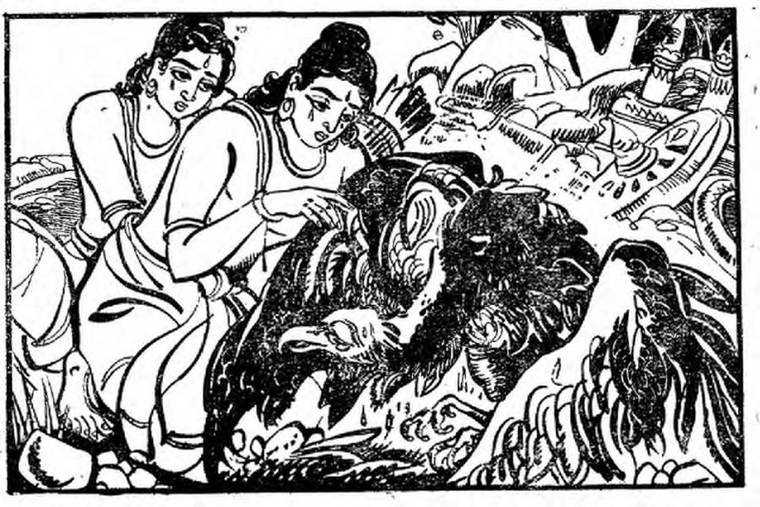
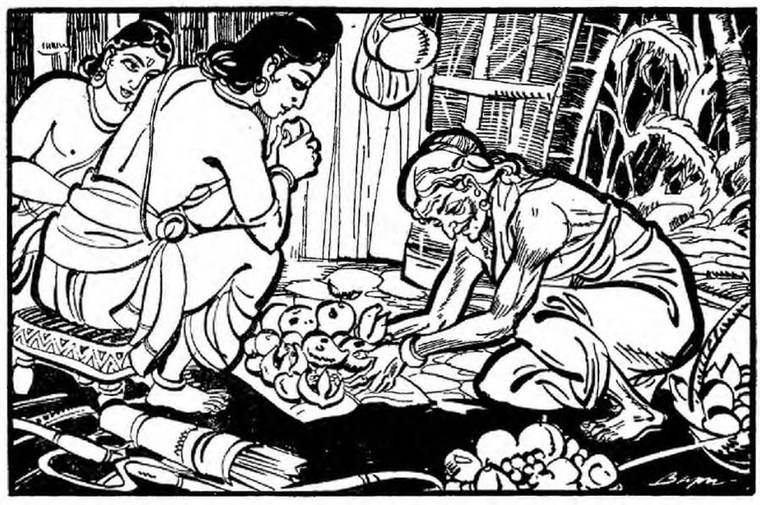
Sargas 46–49: Rāvaṇa in the guise most protected by dharma — the mendicant reciting Veda — is received with the hospitality owed the robe (the tradition's grim lesson on the costs of unconditional courtesies). His self-disclosure and proposal; Sītā's refusal in fury and metaphor (she a haṁsī, he a water-crow; the she-jackal wooing the lion); the transformation, the seizure, the rise of the chariot. Her cries name every tree and the river as witnesses; Jaṭāyu wakes.
Kamba Rāmāyaṇam differs — the untouched Sītā
Vālmīki's Rāvaṇa seizes Sītā bodily — hair and thigh — and hauls her through the sky. For Kambar this is theologically impossible: none may touch Lakṣmī against her will. His Rāvaṇa therefore uproots the entire hermitage — Sītā, cottage and the block of earth beneath — and flies off carrying the ground itself. (Vālmīki's own Uttara Kāṇḍa supplies the supporting logic later tradition uses: Nalakūbara's curse that Rāvaṇa's head shatters if he forces an unwilling woman.)
A note on the Lakṣmaṇa-rekhā
The protective line is in neither Vālmīki nor Kambar's core narrative: in Vālmīki, Lakṣmaṇa simply departs after Sītā's unbearable words, and Rāvaṇa needs no threshold-trick. The rekhā belongs to later and folk tellings (one late reference retrofits it into some Yuddha recensions) — a textbook case of the tradition's accretive growth, worth flagging whenever "the" Rāmāyaṇa is discussed.
Maryādā Puruṣottama — the anatomy of the one breach
Note precisely how the catastrophe is engineered: not by defeating Rāma's strength but by routing around it through the bonds of his household — Sītā's one aesthetic desire, her one unjust speech, Lakṣmaṇa's one overridden judgment, Rāma's one indulgence of a wish against his own suspicion. Maryādā's teaching by negative: the fence fails at its most loving gate. No one sins greatly; everyone bends slightly; the sum is Laṅkā.