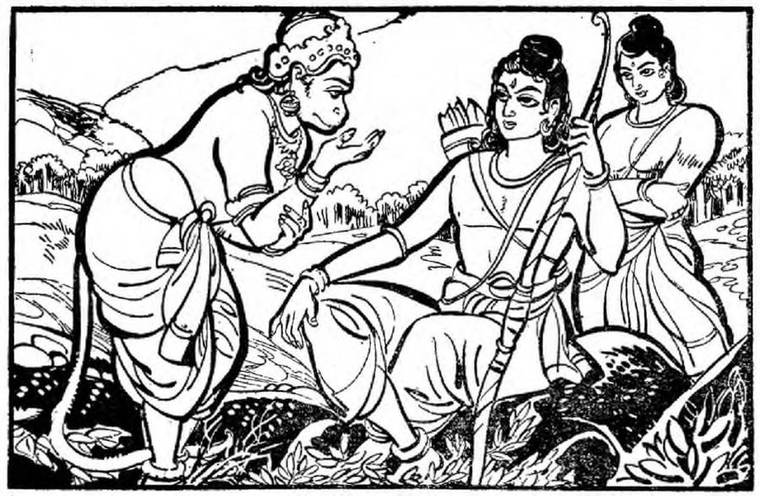
Rāma on Hanumān’s speech
नानृग्वेदविनीतस्य नायजुर्वेदधारिणः ।
नासामवेदविदुषः शक्यमेवं विभाषितुम् ॥
नूनं व्याकरणं कृत्स्नमनेन बहुधा श्रुतम् ।
बहु व्याहरतानेन न किञ्चिदपशब्दितम् ॥
नासामवेदविदुषः शक्यमेवं विभाषितुम् ॥
नूनं व्याकरणं कृत्स्नमनेन बहुधा श्रुतम् ।
बहु व्याहरतानेन न किञ्चिदपशब्दितम् ॥
nānṛg-veda-vinītasya nāyajur-veda-dhāriṇaḥ |
nāsāma-veda-viduṣaḥ śakyam evaṃ vibhāṣitum ||
nūnaṃ vyākaraṇaṃ kṛtsnam anena bahudhā śrutam |
bahu vyāharatānena na kiñcid apaśabditam ||
nāsāma-veda-viduṣaḥ śakyam evaṃ vibhāṣitum ||
nūnaṃ vyākaraṇaṃ kṛtsnam anena bahudhā śrutam |
bahu vyāharatānena na kiñcid apaśabditam ||
Word by word
na an-ṛg-veda-vinītasyanot for one untrained in the Ṛgveda
na a-yajur-veda-dhāriṇaḥnor one who has not mastered the Yajurveda
na a-sāma-veda-viduṣaḥnor one who does not know the Sāmaveda
śakyamis it possible
evam vibhāṣitumto speak like this
nūnamsurely
vyākaraṇam kṛtsnamthe whole of grammar
anenaby him
bahudhā śrutamhas been learnt in many ways
bahu vyāharatā anenathough he has spoken much
na kiñcit apaśabditamnot one word was wrong
MeaningNo one untrained in the Ṛg, not versed in the Yajur, not learned in the Sāma Veda could speak like this. Surely he has studied the whole of grammar many times — he has said much, and not a single word is faulty.
ContextRāma goes on to praise Hanumān’s voice, his calm face and the measured flow of his words. This is the first impression Hanumān makes — through speech.
Philosophical aspectSpeech reveals the mind. Clarity, correctness and calm in words come from clarity and calm within. The epic’s great servant is first of all a great scholar.