The Million Pound Note
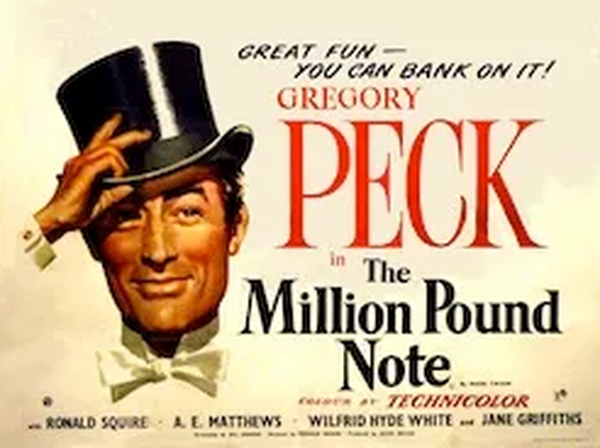
At a Glance
A penniless American sailor is handed a banknote worth a million pounds as part of a wealthy brothers' wager, and discovers that London treats the mere appearance of wealth as though it were the real thing.
Plot
Henry Adams, an American sailor stranded and destitute in London, is chosen by two wealthy, eccentric brothers, Oliver and Roderick Montpelier, as the subject of a wager: what would happen to a poor man given a banknote of impossibly large value, which he can never actually spend? Henry is handed a million-pound note and told simply to survive one month with it.
The moment merchants and society glimpse the note, Henry's circumstances transform overnight. He is given credit everywhere, showered with hospitality, and mistaken for an eccentric millionaire — without ever spending a single pound of the note itself. Along the way he falls for Portia Lansdowne, who is drawn to him before she knows anything of his supposed fortune.
As rumors of the note spread and Henry's reputation grows purely on the strength of assumption, the film wryly exposes how little society's treatment of a person has to do with who they actually are — and how much it depends on what others believe they possess.
Characters & Roles
Henry Adams — The Sailor
An honest, penniless American who becomes an object of fascination the instant he is believed to be rich.
Portia Lansdowne — The Love Interest
A woman whose affection for Henry begins before, and survives beyond, knowledge of his supposed wealth.
Oliver Montpelier — The Wagerer
One of two wealthy brothers who engineer the experiment out of philosophical curiosity about human nature.
Roderick Montpelier — The Skeptic Brother
The counterpart to Oliver, doubtful that mere appearance can substitute for real means.
Philosophical Points
Reflections connecting the film to Vedantic themes of identity, illusion, karma, and the Self.